



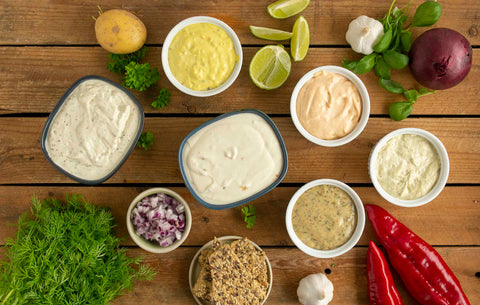
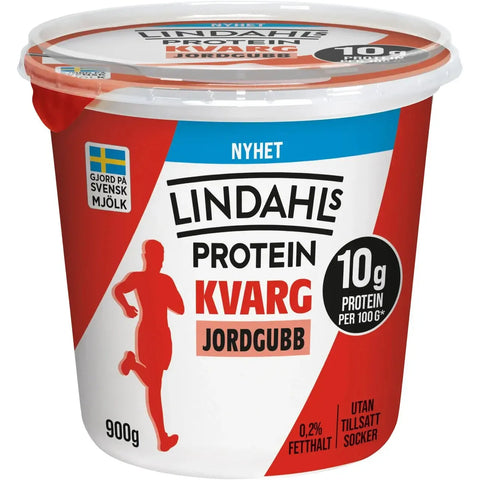
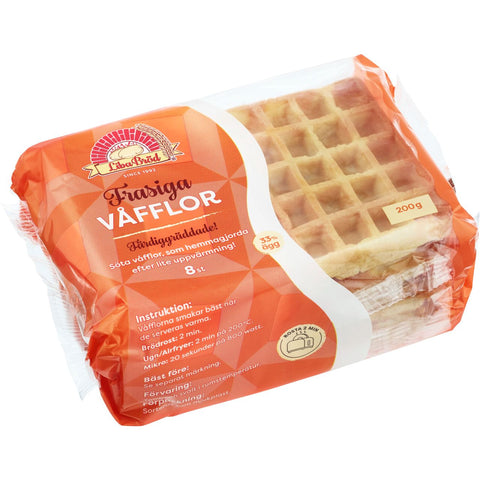
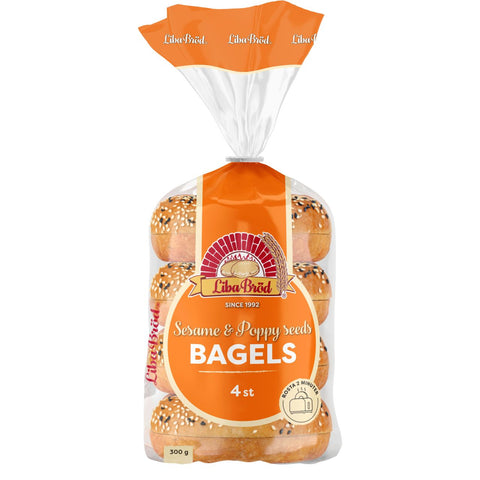
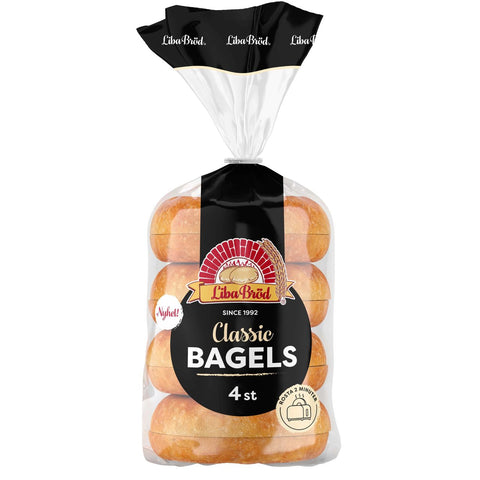
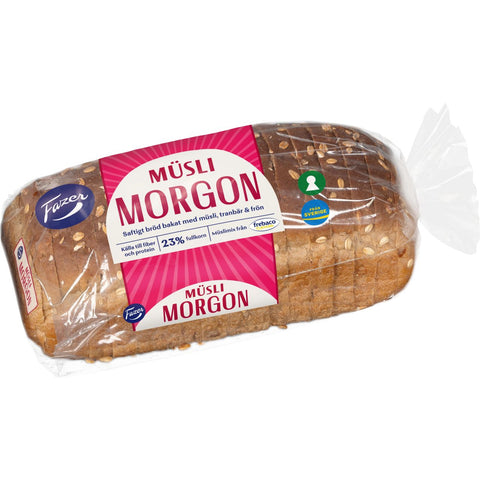
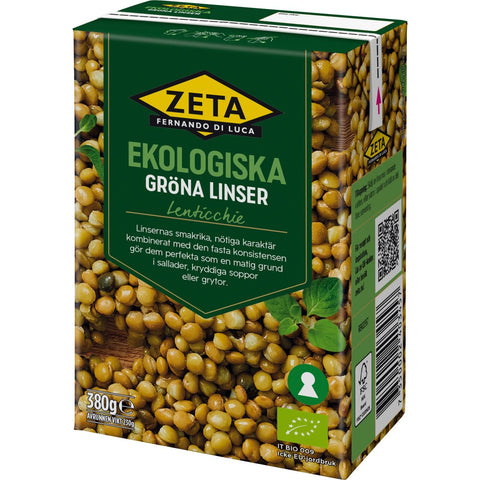
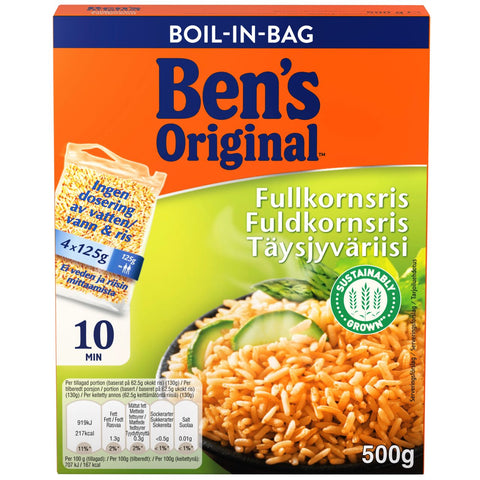


Sweden’s kitchens are evolving. The traditional pantry of milk, rye bread, lingonberries and sweet treats is making room for a new generation of gluten-free, lactose-free and sugar-free favourites. But this isn’t about giving up the foods we love...

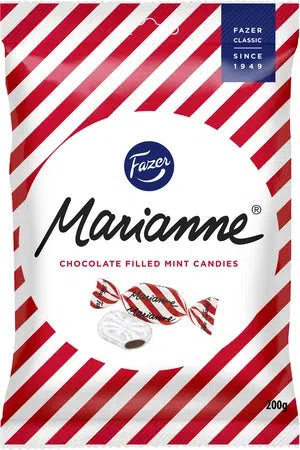
Fazer Marianne - Mint Covered Chocolate Caramel 200g
Marianne is a hard caramel with a combination of mint and crisp. Marianne is also suitable as an ingredient for baking and desserts.
Ingredients: sugar, glucose syrup, cocoa mass, vegetable fat (palm, shea), cocoa BUTTER, flavourings, emulsifiers (lecithin, including SOY). MAY CONTAIN MILK / MAY CONTAIN MILK. The chocolate also contains vegetable fats other than cocoa BUTTER.
Nutrition declaration: Energy (kcal) 440 kcal, Energy (kJ) 1850 kJ, Fat 11 g, Of which saturated fat 6.70 g, Carbohydrates 82 g, Of which sugar 70 g, Fiber 2.20 g, Protein 1.70 g
German: Fazer Mit Minze überzogenes Schokoladenkaramell
Zutaten: Zucker, Glukosesirup, Kakaomasse, pflanzliches Fett (Palm, Shea), KakaoBUTTER, Aromen, Emulgatoren (Lecithin, EInschließlich Soja). KANN ENTHALTEN MILK / KANN MILK ENTHALTEN. Die Schokolade enthält auch andere pflanzliche Fette als Kakao BUTTER.
Nutrition Erklärung: Energie (kcal) 440 kcal, Energie (kJ) 1850 kJ, Fett 11 g, davon Fett 6.70 g, Kohlenhydrate 82 g gesättigte, davon g Zucker 70, Faser 2,20 g, 1,70 g Protein
Seafood
Popular
Latest Articles
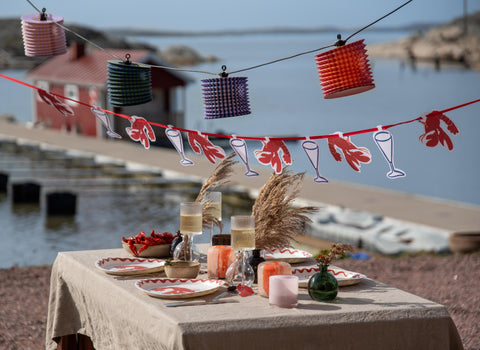
Visit the blogLate summer in Sweden has a way of turning dinner into an occasion. Suddenly, tables are covered with bright red crayfish, paper lanterns glow overhead, sleeves are rolled up, and everyone is happily getting their hands dirty. That is the magic of kräftskiva a Swedish tradition where the food is only part of the...
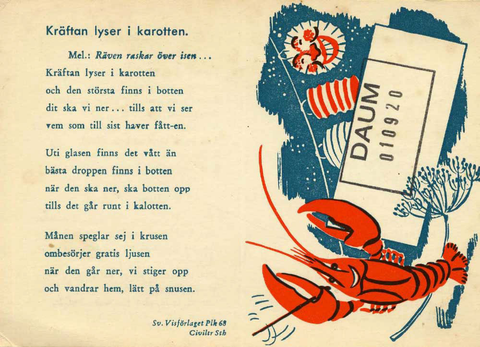
In Sweden, we don’t just eat and drink we sing. Especially during kräftskiva, the beloved late-summer crayfish party, where tradition calls for paper hats, crown dill, and rounds of loud snapsvisor the short, joyful songs sung before (and sometimes after) a shot of snaps...
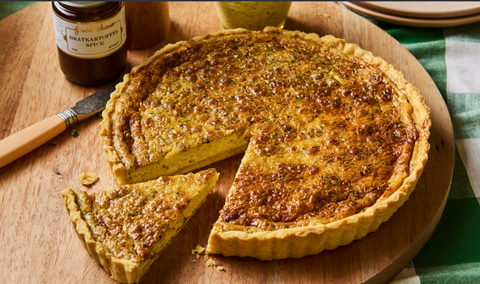
It is late August and the light has gone soft and low. Paper lanterns are strung between the trees, glowing red and yellow, and somebody has hung one slightly crooked and nobody has fixed it. There are silly hats. There is a songbook with a broken spine that comes out every single year, and...
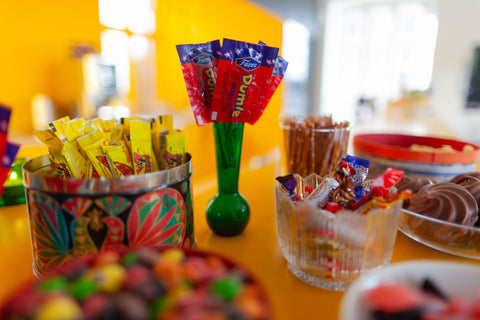
There’s a reason Swedish candy has taken over social media feeds and captured the interest of food lovers around the world. From pillowy marshmallow foams and tongue-tingling sour belts...
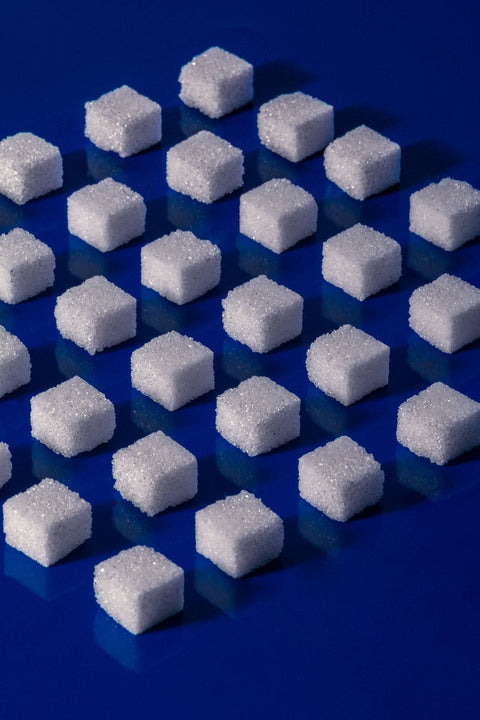
We all enjoy something sweet from time to time, but more people across Europe are becoming mindful of how much added sugar they consume. Instead of giving up chocolate, desserts or snacks altogether...

At Swedishness, we believe that enjoying authentic Swedish food should be simple, inspiring, and accessible no matter where you are. That's why we're constantly working to expand our selection, improve our...
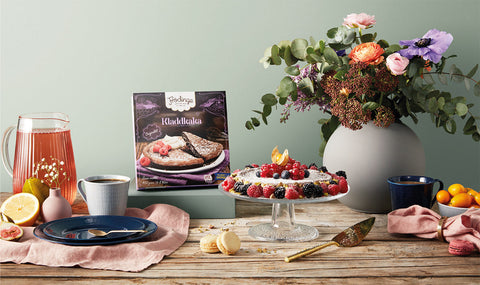
When it comes to Swedish desserts, few names are as well known as Frödinge. For generations, Swedish families have turned to Frödinge for birthdays, celebrations, weekend fika, and those moments when...
If you've stepped outside this week, you've probably noticed it Scandinavia is experiencing an early summer heatwave. Across Sweden and much of Northern...
When people think of Swedish summer, fresh strawberries are often one of the first things that come to mind. However, the popularity of strawberries goes far beyond the berries themselves. During the summer months, strawberry-flavoured products seem to appear everywhere, from breakfast tables to bakery displays and supermarket shelves. Their sweet, familiar flavour...
There is a certain evening every year when Sweden suddenly begins to smell like barbecue again. The weather becomes just warm enough for people to stay outside longer, balconies slowly...
There are some evenings that never quite leave you.
The smell of smoke in your jacket the next morning. Cold fingers wrapped around a paper cup of...
You don’t really think about Swedish Easter when you’re living in Sweden. It’s just there quiet, familiar, almost predictable, woven into the rhythm of the year without asking for...
It feels calm, almost understated, and very much in tune with the Swedish way of celebrating. But step outside on the Thursday before Easter, and you might notice something that feels completely unexpected...
In Sweden, Easter eggs are not just decorative symbols they are an essential part of the meal itself. While many cultures associate eggs with painting and hunting...
In Scandinavia, Easter marks an important transition from winter to spring. After the long, dark Nordic winter, the arrival of...
Swedish Candy – The Ultimate Guide to Swedish Candy
Swedish candy is having a moment. From colourful pick-and-mix walls in Swedish supermarkets to Swedish sweets trending on TikTok and popping up in candy stores around the world, Swedish candy has become a global obsession.
But what makes Swedish candy so special? Why do Swedes love lösgodis so much? What exactly is lördagsgodis? And which Swedish sweets should you try first?
This guide covers everything you need to know about Swedish candy, from classic traditions and Swedish candy terminology to licorice, sour gummies, chocolate, marshmallow sweets and the iconic candies you’ll find in almost every Swedish supermarket.
So grab your godispåse and let’s get into it!

Why Are Swedes So Obsessed With Candy?
The Italians have their pasta, the French have their cheese, and the Swedes have their candy.
Swedish candy culture is deeply connected to the way Swedes enjoy treats: there is an incredible amount of variety, and candy is often associated with weekends, celebrations and cosy evenings at home.
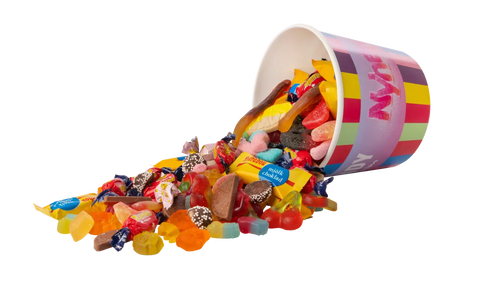
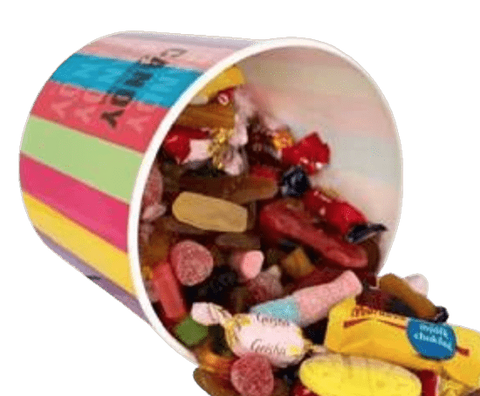
Walk into a Swedish supermarket and you may find an entire wall of lösgodis pick-and-mix candy with dozens or even hundreds of different sweets to choose from.
There is something for practically every taste: sweet, sour, salty, fruity, fizzy, chewy, soft, chocolatey and, of course, plenty of licorice.
And Swedish candy isn't limited to traditional sweets. Over the years, Swedish candy makers have developed endless combinations of flavours, shapes and textures, which is one reason the Swedish candy scene is so much fun to explore.
So, without further ado, let's get into the traditions and treats that make Swedish candy so uniquely Swedish.

Common Swedish Candy Concepts
To understand Swedish candy culture, it helps to know a few Swedish words.
These terms are part of everyday Swedish life and explain why candy plays such a big role in Swedish weekends, parties and cosy nights at home.
Lördagsgodis – Saturday Candy
One of the most famous Swedish candy traditions is lördagsgodis, which literally means “Saturday candy”.
Traditionally, children in Sweden were encouraged to save their candy for Saturdays rather than eating sweets every day. For many Swedish families, Saturday became the day when you could finally choose your favourite treats and fill up on candy.
As someone raised with this tradition, I still think of candy as a treat rather than an everyday food. Growing up, my dad kept the candy in a box that only came out on Saturdays. My sister and I would be sent out of the room while he prepared our godispåse a little bag filled with our weekend favourites.
These days, the tradition isn't necessarily as strict, and plenty of people enjoy candy on Fridays or whenever they're having a myskväll. But the idea remains: candy is something to look forward to and enjoy.
The same weekend tradition often extends to other treats, too crisps, popcorn and dips are classic parts of a Swedish Friday or Saturday night at home.
Lösgodis – Pick & Mix Candy the Swedish Way
If there is one thing you need to experience to understand Swedish candy culture, it's lösgodis.
The word literally translates to “loose candy”, but you'll probably know it as pick-and-mix candy.
In Sweden, you can find enormous pick-and-mix displays in supermarkets, convenience stores and dedicated candy shops. Instead of choosing one bag of one type of candy, you grab a scoop or pair of tongs and build your own selection.
And the variety is the best part.
You might find gummy bears, foam bananas, sour bottles, licorice, chocolate, marshmallow sweets, skulls, fish, cars, mushrooms, fruit-shaped gummies and all kinds of wonderfully strange Swedish creations.
You can choose exactly what you want, whether that's a bag full of sour candy, mostly licorice, a little chocolate, or a chaotic mixture of everything.
There is even a category known as naturgodis, which generally includes things such as dried fruit, nuts and chocolate-covered treats.
Pick-and-mix is so popular in Sweden that many pre-packaged sweets can also be found in smaller versions specifically made for the lösgodis section.
Godispåse – The Swedish Candy Bag
A godispåse is simply a “candy bag” or “sweets bag”.
But in Sweden, it's much more than just a bag of candy.
Children often get godispåsar at birthday parties and other celebrations. Adults bring them to the cinema or fill one up for a cosy night at home.
And because lösgodis is so popular, buying a godispåse usually means choosing all your favourite sweets yourself.
The best part? There are no rules. You can have five different types of gummy candy, a handful of licorice, a few chocolates and something sour just because it looks interesting.
That's the Swedish way.
Myskväll – The Swedish Cozy Night
If you've heard of Swedish fika, lagom or the Danish concept of hygge, you may appreciate the idea of myskväll.
Myskväll literally means “cosy night”.
It's the kind of evening where you stay at home, get comfortable and enjoy something nice with family or friends. It might involve dinner, a movie, board games, a cheese platter or simply sitting outside and chatting.
And very often, there is a godispåse involved.
In the US, you might have a pint of ice cream and a movie. In Sweden, it could be a big bag of pick-and-mix candy and a movie.
Gottegris – The Swedish Goody Pig
A gottegris is literally a “goody pig”.
It's a playful Swedish word for someone who really loves treats or has a serious sweet tooth.
So if someone calls you a gottegris, don't take it personally. They're basically saying you know how to enjoy your candy.

Swedish Candy – All the Different Kinds of Swedish Sweets
Now for the important part: the candy itself.
Swedish sweets come in an enormous range of flavours, shapes and textures. Here are some of the classics you are most likely to come across.
Lakrits – Swedish Licorice
The Nordic countries are famous for their licorice, or lakrits in Swedish.
And Swedish licorice isn't just one flavour.
You'll find sweet licorice, salty licorice, extra-salty licorice, soft licorice, hard licorice and combinations of licorice with fruit, berries, chocolate and other flavours.
One of the most iconic Swedish combinations is raspberry and licorice. You'll find this flavour combination in everything from gummies and toffees to ice cream and chocolate.
Lemon and licorice is another popular pairing.
And then there is salmiak, the intensely salty style of licorice that Scandinavians famously love. If you've never tried it before, be prepared: Swedish salty licorice can be very different from the sweet licorice you may be used to.
Swedes don't stop at candy, either. Licorice flavours can turn up in chocolate, ice cream and all kinds of creative sweets.
In Sweden, there is always another licorice combination to try.
Licorice by the Meter
Yes, you can buy a whole meter of licorice in Sweden.
You'll find long pieces of licorice in kiosks, markets and candy shops, often available in different flavours.
You might choose traditional black licorice, raspberry, cola or something filled with a sweet, sour or fruity centre.
There are also long, thin licorice ropes called snören, meaning “strings” or “laces”. Swedish kids have spent countless hours tying knots and making shapes with these chewy candy strings.
Because apparently candy is also a craft project.

Popular Swedish Licorice Candies
Some classic Swedish licorice sweets include Djungelvrål, Kaninskitar, Salt Sill and Turkisk Peppar.
Djungelvrål means “Jungle Scream” and consists of small monkey-shaped pieces of licorice covered in salt. They are famous for their intense salty flavour.
Kaninskitar translates to “rabbit droppings” yes, Swedish candy names can be wonderfully strange. These are small licorice bonbons.
Salt Sill, or “salt herring”, is a classic salty licorice shaped like little fish.
And then there is Turkisk Peppar sweet licorice with a spicy, salty centre.
If you give one to someone who has never tried it before, their reaction can be quite entertaining.
Sockerbitar – Swedish Sugar Cubes
Sockerbitar means “sugar cubes”, and these sweets are soft, chewy marshmallow-style candies traditionally shaped like little sugar cubes.
In Sweden, soft foam sweets are often referred to as skum, and they come in all sorts of shapes and flavours.
You’ll find foam bananas, dolphins, mushrooms, cars and countless other creations.
Sockerbitar are traditionally pink and white, with a mild, sweet flavour and a soft but chewy texture.
Cola Flaskor – Swedish Cola Bottles
Swedish candy has plenty of cola-flavoured sweets, including the classic cola flaskor, or cola bottles.
Some are soft and chewy like gummy bears, while others have a softer centre or a coating of sour crystals.
There are also cola-flavoured rolls and ropes covered in sour sugar.
If you like the combination of cola and sour candy, Sweden has plenty for you to discover.
Sour Candy
Swedes love sour candy.
Very sour candy.
You’ll find everything from sour gummy bears and bottles to bonbons with sour powder on the outside and an even more intense centre inside.
Sour candy is a huge part of the Swedish pick-and-mix experience, and many people deliberately add a few extremely sour pieces to their godispåse.
If you're new to Swedish candy, trying a mixture of sweet, sour and salty sweets is one of the easiest ways to experience the variety.
Swedish Fish
The candy fish you know around the world have Swedish roots.
Malaco's classic fish-shaped sweets are soft and chewy, with fruity flavours and a distinctive texture.
They come in different varieties and colours, and fish-shaped candy is still a familiar sight in Swedish pick-and-mix selections.
And no, they don't come from the ocean.
They come from the candy aisle.
Polkagrisar – Sweden's Iconic Peppermint Candy
Polkagrisar are one of Sweden's most recognisable traditional sweets.
The classic polkagris is a long, twisted candy stick made from red and white candy and traditionally flavoured with peppermint.
The candy is closely associated with Gränna, a town in southern Sweden that has become famous for making polkagrisar.
The name itself is wonderfully Swedish. Gris means “pig”, while polka refers to the dance a reference to the candy's characteristic twisted pattern.
Today, you'll find polkagrisar in many different flavours and colours, but the classic red-and-white peppermint version remains the original.
If you want to try a traditional Swedish sweet, this is a great place to start.

Swedish Chocolate
Swedes love chocolate just as much as they love pick-and-mix candy.
Some of the most recognisable chocolate treats associated with Sweden include:
Marabou Milk Chocolate
A Swedish classic and one of the country's best-known chocolate brands. Marabou comes in a huge variety of flavours and combinations.
Daim
Crunchy almond caramel covered in chocolate. Daim is one of those Swedish sweets that has become popular far beyond Sweden.
Kexchoklad
Crispy wafers covered in milk chocolate. It's a Swedish classic and a favourite snack for everything from coffee breaks to hiking trips.
Swedes also enjoy plenty of international chocolate brands. After all, you don't have to be Swedish to make good chocolate.
Pastiller – Swedish Pastilles
Pastiller are small sweets or lozenges that often come in tiny cardboard boxes.
Some are fruity and sweet, while others are minty, sugar-free or more similar to traditional throat lozenges.
Läkerol is one of the most recognisable Swedish pastille brands, while PimPim is a classic fruity favourite.
And if you've never tried violet pastilles, you're missing one of those wonderfully old-school Swedish flavours.
Karameller – Caramels and Bonbons
Sweden has plenty of traditional karameller, meaning caramels or bonbons.
You'll find all kinds of flavours, from sweet and fruity to sour, salty and chocolate-filled.
Markets and speciality candy shops often have handmade versions, while Swedish supermarkets carry many classic packaged varieties.
One traditional favourite is Marianne, a mint bonbon with a chocolate centre.
Center & Plopp – Chocolate With Soft Caramel
If you love chocolate and caramel, you'll want to know about Center and Plopp.
Both are Swedish chocolate favourites with soft caramel centres.
Think of them as small chocolate bars where the caramel is the star of the show.
They are classic Swedish fika-and-candy-aisle staples and perfect for anyone who thinks chocolate is even better with a little caramel inside.
Svenska Bilar – Swedish Cars
One of the most iconic Swedish candies isn't a fish. It's a car.
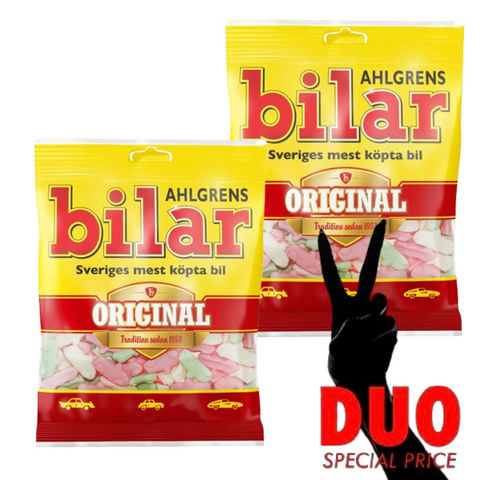
Ahlgrens Bilar, often simply called Swedish Cars, are soft foam candies shaped like little cars.
They are traditionally found in white, pink and green and have a distinctive fruity flavour.
They've become one of Sweden's most recognisable sweets and one of the easiest candies to spot in a Swedish pick-and-mix selection.
Sweden also has candy versions of other vehicles, including Ferraris.
Much cheaper than the real thing.
Vingummi – Wine Gums
Vingummi, or wine gums, are chewy fruit-flavoured sweets that are very popular in Sweden.
Despite the name, traditional wine gums don't contain wine or alcohol.
You'll find them in many shapes, colours and fruit flavours, making them another classic addition to a Swedish godispåse.

Healthier Alternatives and New Swedish Candy
Swedish candy isn't standing still.
Alongside traditional sweets, newer Swedish candy brands have been experimenting with different ingredients, flavours and formats.
You'll find brands focusing on things such as vegan sweets, organic ingredients, natural flavours and alternative recipes.
One example is JOM, which makes vegan sweets with a focus on plant-based ingredients.
There are also brands such as DIG, which create indulgent treats that sit somewhere between candy and dessert.
The Swedish candy scene is constantly evolving, so there is always something new to discover alongside the classics.
Swedish Holiday Candy
Candy is also a big part of Swedish celebrations and holidays.
Easter Candy
Swedish Easter is particularly colourful when it comes to sweets.
Children traditionally dress up as little witches and go from door to door asking for candy. Easter eggs are also filled with sweets and chocolate.
You'll find chocolate eggs, marzipan eggs, fruity sweets and soft marshmallow-style fillings appearing around Easter.
And yes, Swedes take their Easter candy seriously.
Christmas Candy
Christmas brings another wave of seasonal sweets.
You'll find chocolate, toffee, caramel and soft foam sweets in festive shapes, including Christmas-themed marshmallows.
Many Swedish families also make their own Christmas candy at home, turning the weeks before Christmas into one long excuse to eat something sweet.
Midsummer
Midsummer is a little different.
Instead of a giant candy tradition, Swedish Midsummer is all about strawberries, whipped cream, new potatoes, herring, friends and long summer evenings.
And we're perfectly happy with that.

What Makes Swedish Candy Different?
So why has Swedish candy become so popular outside Sweden?
Part of the answer is variety.
The Swedish candy aisle gives you an incredible number of flavours, textures and combinations in one place. Sweet, sour and salty candy can all live happily in the same bag.
Another part is the culture around it.
Swedish candy isn't just about buying a packet of sweets. It's about choosing your own combination, sharing a godispåse, having candy on a Saturday, or enjoying it during a cosy myskväll.
And then there's the fun.
Swedish candy comes in unexpected shapes, unusual flavour combinations and some wonderfully strange names.
Once you discover Swedish pick-and-mix, it's very easy to understand why Swedes are so obsessed with it.
The Sweet Sum Up
There are almost too many Swedish candies to cover in one guide.
From salty licorice and sour gummies to chocolate, foam sweets, cola bottles, Swedish Cars and traditional polkagrisar, Swedish candy has something for practically every sweet tooth.
But the best way to understand Swedish candy isn't to read about it.
It's to try it.
Fill a godispåse with a little bit of everything: something sweet, something sour, something salty, a piece of chocolate and, if you're feeling brave, some Swedish licorice.
Then find a cosy spot, put on a movie and enjoy your very own myskväll.
And remember:
Swedish candy is always better when you have a little bit of everything.
All Candy
Our Extraordinary Customer Experience
We take pride in providing an Extraordinary Customer Experience from beginning to end and if something goes wrong with your delivery we refund you right away, no questions asked, life is too short!