

Regular price

Why Do We Love Food That Makes a Mess?
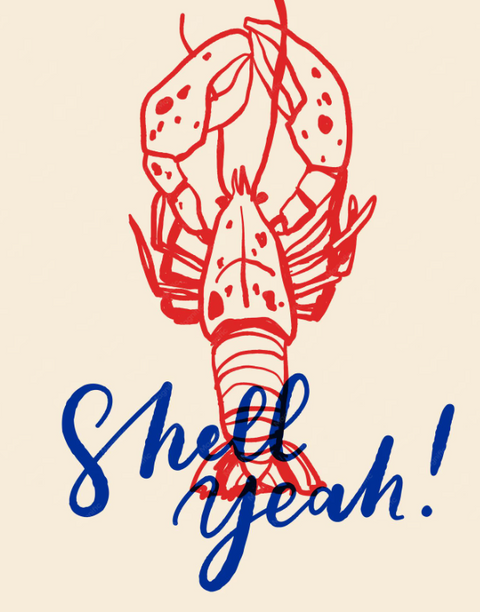
Late summer in Sweden has a way of turning dinner into an occasion. Suddenly, tables are covered with bright red crayfish, paper lanterns glow overhead, sleeves are rolled up, and everyone is happily getting their hands dirty. That is the magic of kräftskiva a Swedish tradition where the food is only part of the experience. There are songs, snaps, endless conversation and, inevitably, a table full of shells and napkins. But perhaps that is exactly why we love it. What happens when we stop worrying about perfect table manners and simply enjoy eating together? From the history of the Swedish crayfish party to the rituals that make it so special, let’s look at why some of our most memorable meals are also the messiest.
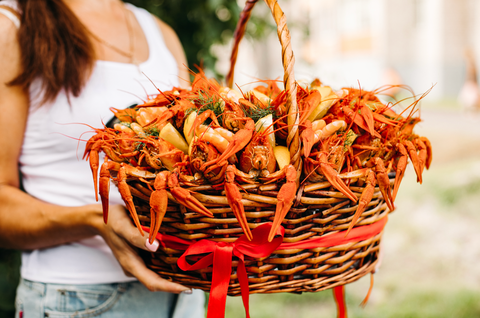
Kräftskivan is an end-of-summer ritual uniquely Swedish. According to Sweden’s Nordiska museet, Swedes have eaten crayfish since at least the 1500s, but it was originally an elite luxury. “Kräftätandet i Sverige kom via impulser från kontinenten och är känt sedan åtminstone 1500-talet. Liksom många andra festseder fick det först genomslag hos de högre stånden” Eating crayfish came from continental Europe, known since at least the 1500s, and like many festive customs it first took hold among the upper classes. (King Erik XIV famously demanded crayfish for his sister’s 1562 wedding, and even kept live crayfish in castle moats.) It wasn’t until the late 19th and 20th centuries that crayfish feasts (“kräftsupé” or kräftkalas) spread to wider society. Overfishing forced a legal fishing ban except in August, and Swedes turned this limitation into an occasion: the first catch of August became an annual celebration. “Rather than viewing the restriction as a limitation, Swedes turned it into a festive opportunity,” writes one travel guide.
Today, imported crayfish keep the season alive, but the party date remains fixed: early August (“kräftpremiär”). As Nordiska museet notes, Swedes still start eating crayfish in early August even though the old ban ended in 1994. In this way an ecological rule morphed into an iconic ritual, woven into Swedish identity. Nordiska museet even observes that “Kräftfesten är en av de högtider som i vår tid ofta förknippas med en svensk självbild” the crayfish festival is one of the holidays today most often associated with a Swedish self-image.
From the 1920s onward the classic kräftskiva format long outdoor tables, paper lanterns, bibs and silly hats – took shape. Guests sing traditional snapsvisor (drinking songs), raise aquavit shots (“snaps”), and pass around platters of cold dill-seasoned crayfish. As the cultural guide Stockholm à la carte describes it, “Laughter rings out, joyful traditional songs are sung and you can even hear the distinctive sounds of guests enthusiastically cracking open their crayfish… The air fills with briny and aniseed aromas [from dill]”. The fête symbolizes saying goodbye to summer: it’s “a way to celebrate the last warmth of summer, to enjoy the lingering light before the return of winter darkness, and above all, to come together with friends or family”.
One August evening at a Swedish kräftskiva: long tables on a summer patio, paper lanterns above, guests in silly “kräftmössa” (crayfish hats) and bibs, red crayfish piled high, and glasses of snaps ready for toasts. This relaxed scene “messy, singing feast” in one guide’s words is the culmination of centuries of tradition. Even now, Swedes savor not just the crayfish, but the ceremony: the matching dill crowns, the communal song, the departure from everyday formality.
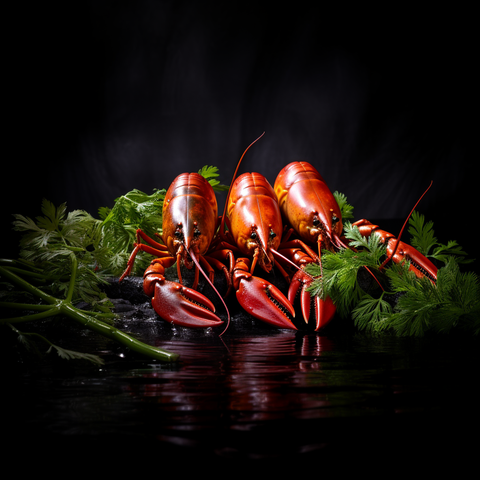
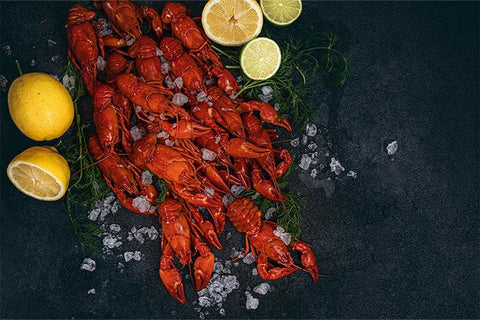
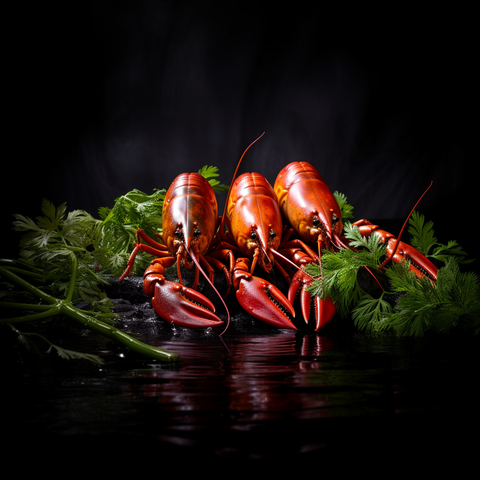
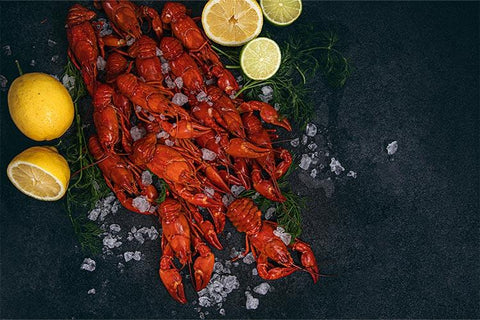
Why are we drawn to a dinner that leaves us grubby? Psychologists suggest communal eating amplifies social bonding. In one Oxford study, people who regularly eat with others reported greater happiness, wider social networks, and a stronger sense of community. “Communal eating increases social bonding and feelings of wellbeing,” concluded the researchers. Professor Robin Dunbar even argues that eating together may have evolved to bring people closer.
Neurologically, sharing a meal triggers feel-good chemistry. Research in Adaptive Human Behavior and Physiology shows that social meals activate the brain’s endorphin system the same pathways linked to oxytocin and dopamine, the “bonding and pleasure” hormones. In other words, passing dishes and tasting from each other’s plates literally makes us feel more connected. (In fact, anthropologists call the act of eating together to strengthen social ties “commensality”.) Studies also find that people who eat together tend to have lower loneliness and better mental health. Simply put, breaking bread builds bonds.
The ritual aspects of a kräftskiva – the synchronized song, the rounds of snaps, the lantern-light ambiance – likely magnify the effect. Rituals and synchronized actions (singing, clinking glasses) are known to foster group cohesion and even stimulate endorphins. At a kräftskiva, every “Helan går!” chorus and every synchronized crab-shake or tail-pinching moment is a tiny collective heartbeat reinforcing that “we’re in this together.” A similar phenomenon is seen in other cultures: for example, at a Louisiana crawfish boil everyone crowds around a newsprint-covered table, peeling shells by hand and sharing stories. “No utensils [are] required… the communal, no-frills atmosphere is at the heart” of that feast.
What about mirrors and microbes? Touching the same food can also build empathy and trust. Occupational therapists note that hand-eating in groups has a rhythmic, “co-regulatory” quality like drumming or knitting that creates synchrony between people. In short, when diners knead potatoes or tear crayfish together, they literally fall into step and their nervous systems relax. And as children instinctively show us, feeling food (even if it’s messy) is a fundamental way to connect to it and to each other.
At a kräftskiva, you discard your formal manners: utensils are optional (actually frowned upon), and napkins quickly become bibs. This open defiance of etiquette is part of the charm. By lowering the guard of polite behavior, messy communal meals invite intimacy. As one parenting column quipped, making a child play with (or eat with) food is “not a substitute for eating…it’s an important part of learning to love food and to be comfortable around it”. Likewise, adults who peel crayfish together share a vulnerable hands are dirty, faces get sauce that paradoxically feels safe in friendly company.
Culturally, Swedes are known for egalitarian attitudes, and the kräftskiva embodies that. Under red paper hats and shell-strewn tables, status vanishes. Everyone waits for the same sloppy dessert of dill and butter the wealthiest at the castle and the student in a shoebox share that moment. As Hajjar’u! Culture Guide puts it: “Boiled [crayfish]…eaten cold with hands. The mess is part of the fun.”. The gawky hats and bibs even form a comedic equalizer – whether CEO or child, you look absurd in a lobster cap, and that shared absurdity breeds camaraderie.
Taboos fade: making “sucking noises” while eating crayfish is not only allowed, it’s encouraged a clear flip of convention. In some ways, the kräftskiva is Sweden’s answer to other rowdy feasts: think Spanish tapas parties or Southern crawfish boils. Indeed, in Cajun culture “crawfish…became a staple…as a symbol of community” with folks “gather[ing] around a newspaper-covered table, no utensils required, sharing stories while peeling and eating by hand”. In both cases, messy eating equals communal celebration.
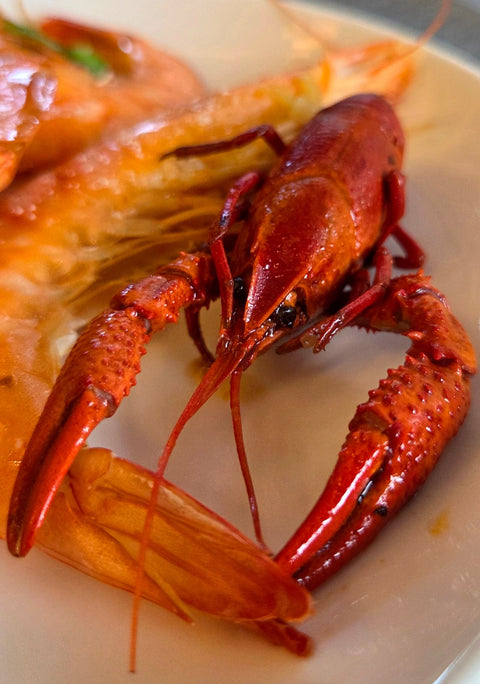

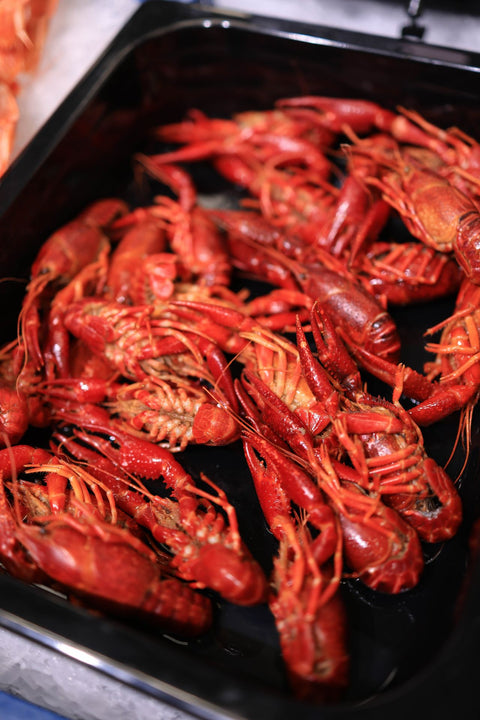
A kräftskiva is a full-sensory experience. Picture it: a late August twilight in Sweden. Long wooden table set under a canopy of cotton-candy sky, gilded by string-lights and colorful paper lanterns (often imprinted with a grinning moon). Guests surround it, napkins tied at neck, with piles of bright red spiky crayfish towering on platters. The air is fragrant with dill and boiled salt aniseed notes rising from the cooking pot . Bottles clink as aquavit is poured over ice; the snap of a cork, the fizzy hiss of soda all rise above laughter.
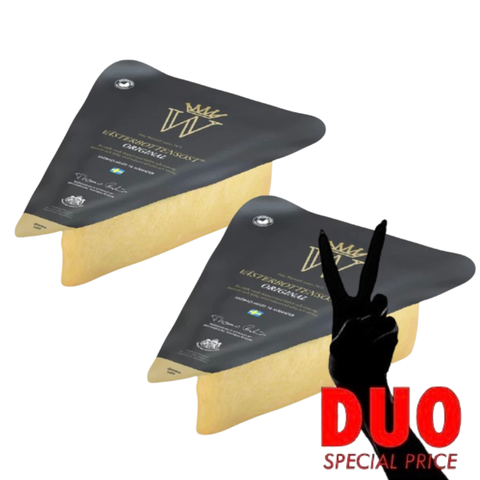
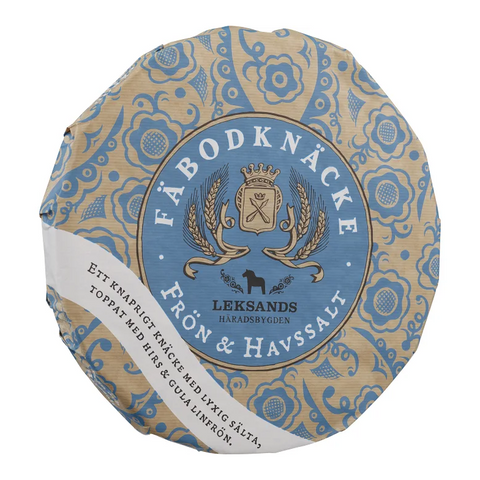
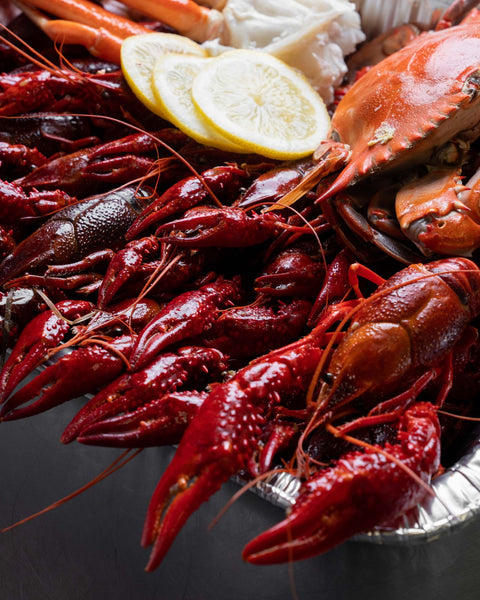
Hands dive in: the cold, slippery shells crack under fingers; a little spray of brine; the tender sweet meat revealed. Someone grabs a wedge of lemon; others tangle in the tines of a crayfish fork. Nearby, wedges of buttered knäckebröd (crispy rye crispbread) share the stage with slices of tangy Västerbotten cheese and maybe a bacon-topped potato salad or Västerbotten cheese pie. The snack of kräftstjärtar (tail-tips) and smörgås grows into a communal buffet. Every sense is at play: the sound of snapping exoskeletons and exultant whoops, the sight of glowing faces beneath lantern light, the taste of fiery cinnamon snaps going down with chilly beer or cider, the lingering scent of dill and candle smoke.
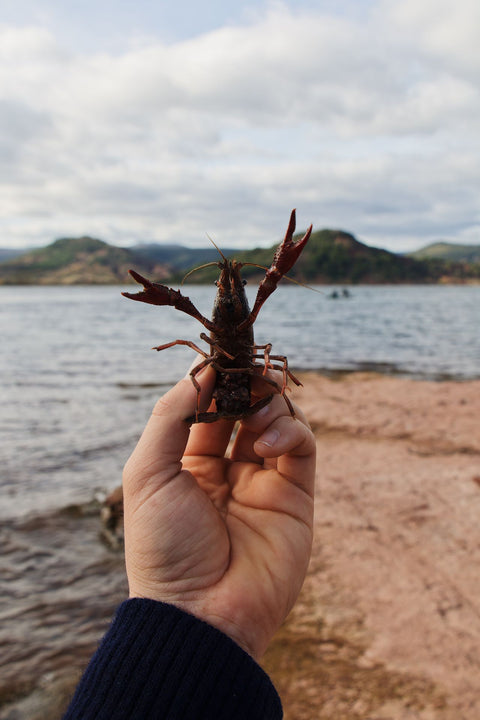
Close-up detail: a glistening crayfish held in hand over a paper-flag-decorated table. Note the leftover dill fronds and a finger smeared with shell juice. Crayfish are traditionally boiled with sugar, salt and crown dill (pictured) and served ice-cold – the perfect tactile, salty snack to devour by hand.
Visually, a kräftskiva has its own “aesthetic” that’s become popular on Instagram and décor blogs: checkered or striped tablecloths (red/white), flickering candles in wine bottles, clusters of lanterns, bouquets of late summer flowers, little Swedish flags stuck in the food, and yes, silly sailor hats or paper crayfish crowns. One could curate a social-media carousel of such images – but the real beauty is in the motion: the steam from the pot, the circling of snapps, the cascade of laughter.
There’s an unstated question in any messy feast: why do we relish it, even though it violates table etiquette? Some writers argue that strict table manners evolved to civilize meals, but those same mannerisms can make food feel distant. The Guardian’s food columnist notes that letting children touch and play with food actually encourages a healthy relationship with eating. By extension, adults also loosen up: a crayfish party is a socially sanctioned way to rebel against the usual stiff dinner protocols. It’s not by accident that we drink liquor, wear ridiculous hats and use paper napkins all devices to break the “real life” script.
In Swedish culture specifically, the kräftskiva has a bit of absurdist humor. One commentator joked that it’s “like Christmas Eve in August” with half-serious religious reverence to a crustacean. Sociologist Christina Johansson Robinowitz observes that the hats, snapsvisor and silliness of kräftskiva are “extremely Swedish” kitsch. The silliness gives license: it’s okay to belch, to spill, to sass. Everyone knows the point is not refinement but warmth and fun.
Manners aren’t thrown out completely – for example, there are etiquette touches (always re-dunk the drink carefully, always say tack for each bit of crayfish you peel for someone, no double-dipping in butter). But the bylaws of dining are radically simplified. In Sweden this kinship over casual dining resonates with broader values of equality and consensus. When the CEO and intern are both tapping away at horns of crayfish, everyone is metaphorically and literally on the same level.
In the end, what makes the crayfish party special is not the food itself but what it does to us: it loosens our shoulders, sparks laughter, and connects us. So this crayfish season, scatter the shells freely and trade polish for play. After all, sometimes the fondest memories (and the sweetest bonds) come from a meal that leaves us gloriously untidy and together.