

Beyond Meatballs: The Evolution of Nordic Cuisine
How Njørden is bringing a modern Nordic perspective to Switzerland
While Swedish meatballs and cinnamon buns may be what outsiders think of when they hear “Swedish food,” today’s Nordic cuisine is defined by seasonality, simplicity and respect for nature.
In Aubonne, Switzerland, the restaurant Njørden illustrates this evolution, blending Scandinavian ingredients and techniques with Alpine products and French culinary polish. The result is a Nordic-inspired menu shaped by local Swiss seafood, vegetables and cheeses, smoke and fermentation, and elegant sauces that wouldn’t feel out of place in Copenhagen or Vaud.
A New Nordic Ethos
Nordic cooking has undergone a quiet revolution since the early 2000s. Chefs like René Redzepi at Noma and others championed what became known as the New Nordic cuisine, a philosophy rooted in the region’s own resources. In 2004, Nordic chefs penned a manifesto pledging to express “the purity, freshness, simplicity” of the North in every dish. The idea was to let nature and season do the talking: sour berries in summer, smoked fish in winter, wild herbs plucked from forests. Long-held traditions; pickling, smoking, curing and fermenting resurfaced not out of necessity alone, but as creative tools to honor the seasons and reduce waste.
That shift means that Nordic cuisine today is about a way of thinking, not a fixed menu. It asks: What does our landscape give us right now? If meatballs and lingonberry jam are part of Swedish heritage, modern chefs see them as starting points, not rules. They apply old techniques to new ingredients: wild mushroom pickles, kelp salts, fermented root-vegetable purées. As one manifesto signatory put it, chefs now “combine local self-sufficiency with regional sharing of high-quality products.” Njørden takes that literally: it sources herbs and veggies from a nearby micro-farm, and pairs Scandinavian ideas with Swiss terroir.
Njørden in Aubonne: A Nordic–Swiss Blend
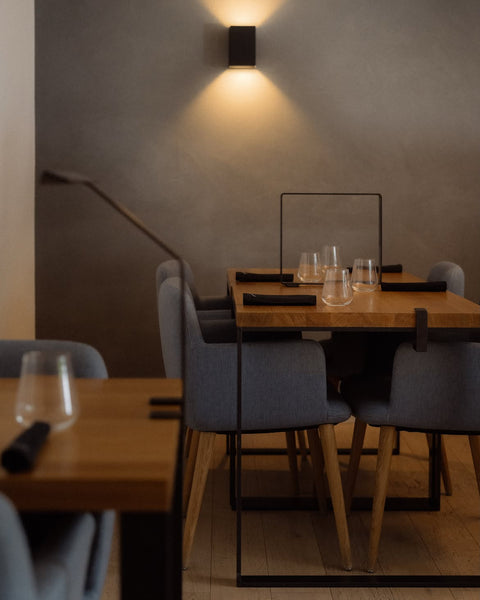
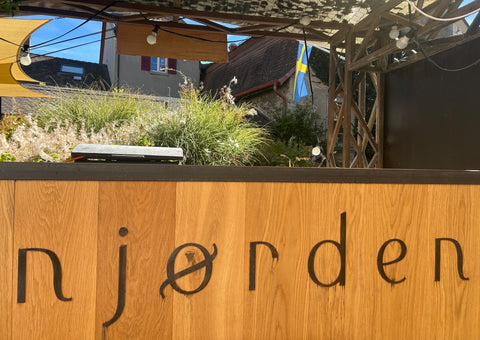
Njørden is a “gastronomic Nordic restaurant” on a sunny hill above Aubonne (Vaud). Njørden is co-owned by Philippe Deslarzes and Viktor, who also has Swedish family roots. Together, their backgrounds help give the restaurant its distinctive connection to Scandinavian culture. They opened Njørden in spring 2021 to create a place where their dual heritage could coexist. The result is a menu that mixes Swiss ingredients with Scandinavian soul.
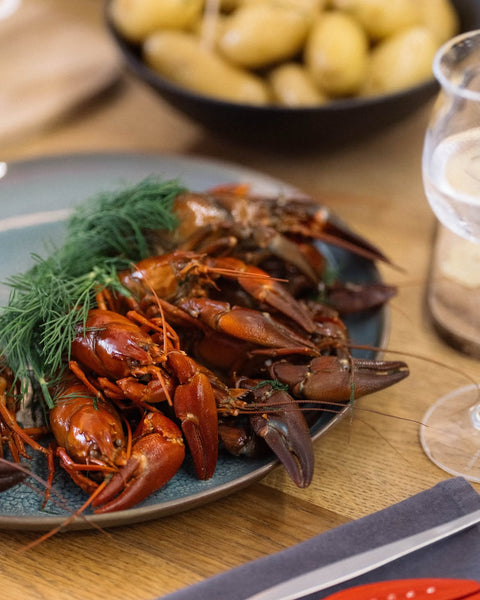
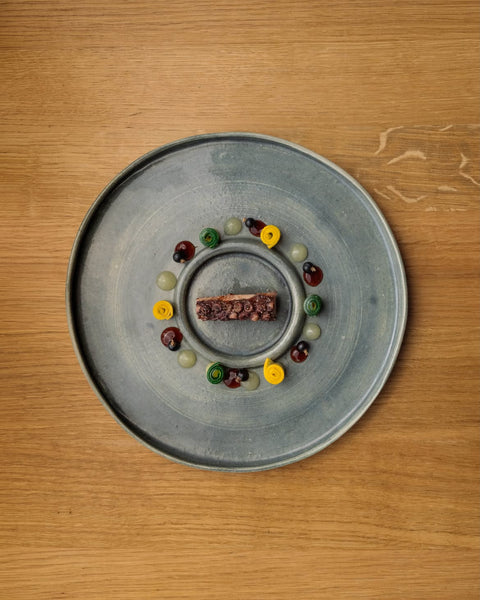
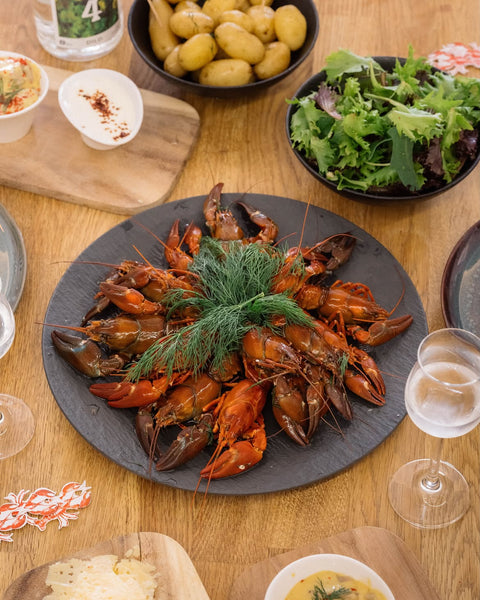
Jeunes Restaurateurs notes that at Njørden “the chef blends Swiss and Scandinavian influences in every dish,” focusing on “freshwater fish, shellfish and local products” prepared with Nordic techniques (smoking, salting, fermentation). For instance, freshwater trout from nearby lakes might be hot-smoked and paired with fennel and beer vinegar (as on the current menu). Dishes often feature crustaceans (spider crab, langoustines) and local vegetables, alongside artisanal Swiss bread and cheese.
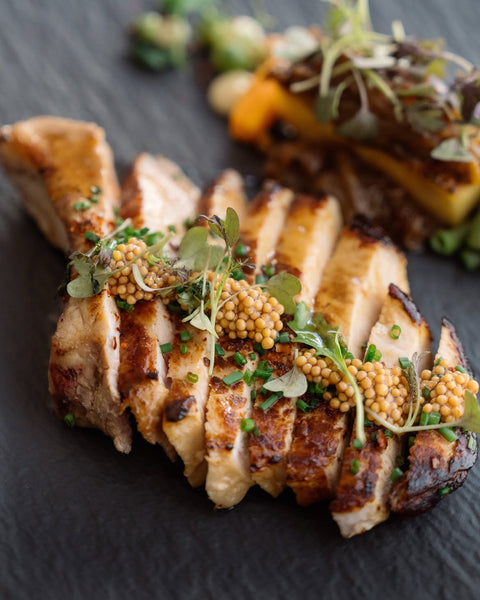
Michelin’s review of Njørden highlights this fusion: it praises Deslarzes’ “modern, readable cuisine, focused on the natural quality of the product,” citing dishes like Danish langoustines in a vadouvan bisque with red and white beets, and Nordic cod (skrei) served with braised endive and clove. These examples show how Nordic ingredients (cold-water cod, nordic spices, sea carrots) are combined with recipes and garnishes that could equally belong to a fine French kitchen. Every plate is described as “precise, clear and full of flavor,” with careful, unfussy presentation.
Importantly, Njørden has been recognized for its excellence: it earned 16/20 from GaultMillau and a Michelin star. This acclaim underlines that its creative Nordic–Swiss approach is not just a gimmick but genuine high gastronomy.
French Technique Meets Nordic Restraint
At Njørden, classic French culinary technique provides the polish that highlights, rather than overwhelms, the Nordic-inspired ingredients. Sauces like bisques and beurre blanc (indeed, the menu pairs spring trout with a beurre blanc) lend richness, while cooking is precise and controlled. Michelin notes how Deslarzes “combines modernity and clarity” in his cooking. The langoustine dish mentioned above includes a complex vadouvan (Indian-inspired curry) bisque – a very refined element – yet the overall effect is light and product-driven.
In other words, French and Nordic sensibilities work together. The French tradition brings delicate sauces, precise techniques and finesse; the Nordic tradition brings seasonal produce, wild herbs and restraint. One value from the Nordic manifesto is to “combine the best in Nordic cookery and culinary traditions with impulses from abroad”, and Njørden exemplifies this by pairing a minimalistic style with fine-dining execution. The service, too, is polished (as Michelin notes, with attentive sommelier guidance) without any Northern austerity – it strikes a balance of Swiss efficiency and Scandinavian lagom warmth.
Alpine Terroir in Nordic Hands
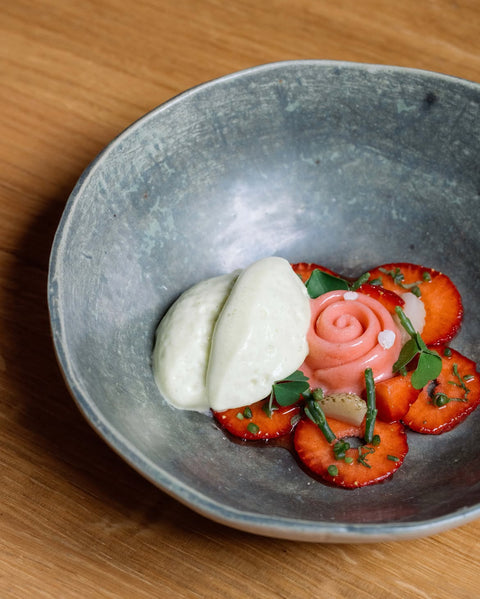
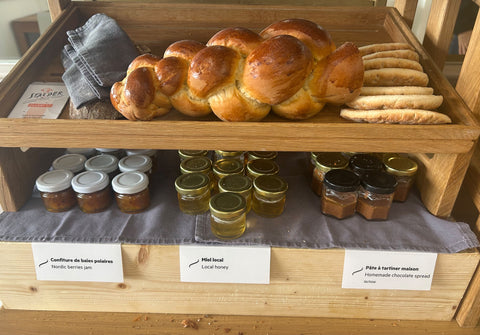
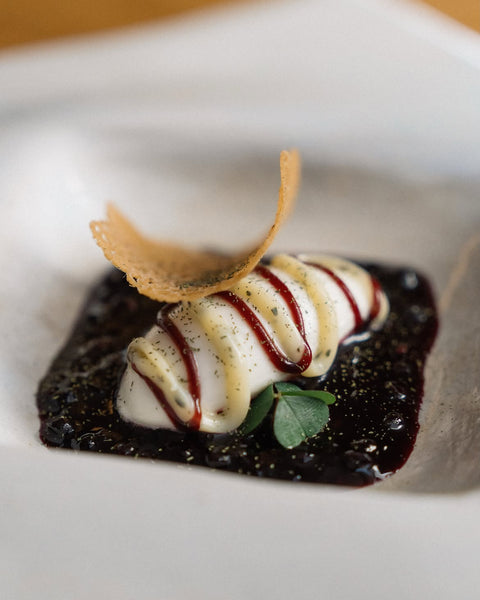
Njørden’s menu also weaves in the Alpine and local “terroir” of Vaud. Swiss cheeses and freshly baked breads routinely accompany the meal. Alpine trout and perch (from Lac de Joux, for example) appear alongside Nordic fish. Local herbs and berries, like juniper and elderflower from the nearby woods, flavor dishes or cocktails. One menu referenced in Swiss media even featured a dessert with spruce-tip cream and a sea-buckthorn “soup,” and a wild melilot (yellow sweet clover) herb dish served with mussels. These details demonstrate that even when the inspiration is Scandinavian, the ingredients often come from Swiss fields and forests.
As Njørden’s own story notes, Deslarzes was determined to create a restaurant “dedicated exclusively to lake and sea treasures”. In practice, that means Swiss lake fish and local produce are treated with a Nordic mindset. The Alpine setting (vineyards, meadows and lakes) becomes part of the flavor profile. For example, Swiss rutabaga and beets might be braised with Nordic spices; Swiss honey or local berries might sweeten a dessert in a way that nods to Swedish bär. In this way, Nordic cuisine adapts to Swiss terroir – it’s not a copy of Sweden, but a meeting of traditions.
Why It Matters?
Njørden’s success shows that the idea of Nordic cuisine has outgrown Scandinavia. For Swedishness readers, it’s a reminder that Swedish and Nordic food culture isn’t locked to Sweden’s borders. The same core values – respect for seasonality, nature, provenance and craft – can thrive elsewhere. Njørden is “a Nordic-inspired gastronomic restaurant” set in the heart of Swiss wine country, proving that tradition and innovation travel together.
In practice, this means Nordic ingredients (smoked fish, root vegetables, wild herbs) can shine alongside Alpine ingredients when handled with the same philosophy. As one Nordic manifesto point says, local self-sufficiency can combine with sharing great regional products. Njørden exemplifies this: local Swiss ingredients meet Scandinavian technique. It underscores that Swedish cuisine, broadly speaking, is about approach more than specific recipes.
Ultimately, the evolution of Nordic cuisine is a story of cultural exchange. Whether in Stockholm or in Aubonne, chefs ask the same question: “What do my waters and seasons give me right now?” Njørden answers that question on Swiss soil, and in doing so, it expands what Swedish and Nordic food can be.
Away from home, Nordic cooking doesn’t lose itself, it gains new context. Njørden’s kitchen proves that embracing local terroir, French finesse and Scandinavian simplicity can create something uniquely compelling. Rather than asking “is this Swedish or Swiss?”, we see that it can simply be great food informed by both. Njørden reminds us that the essence of Nordic cuisine; seasonality, preservation and craft, can take root anywhere, carrying Swedish culinary values across borders.
© Photos: Njørden / Official restaurant website & Social Media