
Regular price

Unraveling the Legend of Saint Lucia: A Swedish Tale of Light and Darkness
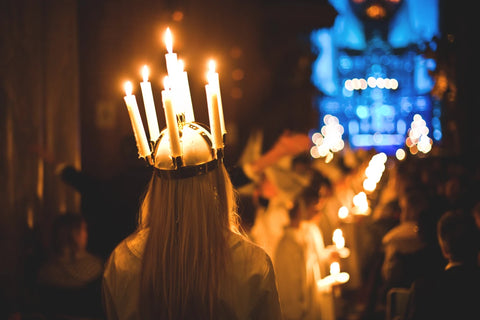
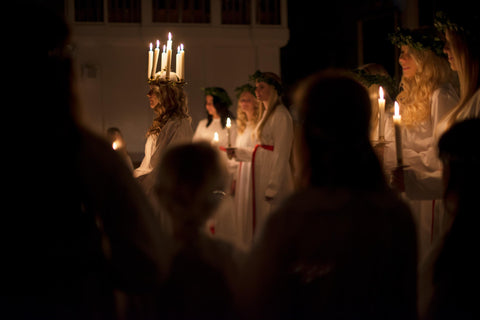
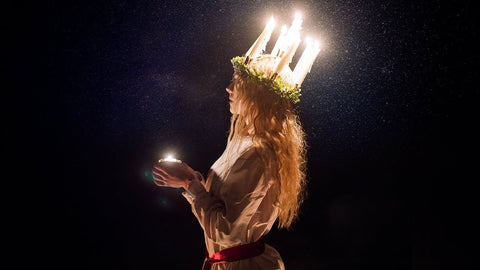
It’s predawn on December 13th in Sweden. Out of the winter darkness comes a line of singers, led by a young woman in a white robe with a crown of glowing candles on her head. This is Lucia, the bearer of light on a dark morning, and her procession marks the beginning of the festive season. Behind this serene spectacle lies a deeper story a mystery interwoven with legend and history.
Every year on Lucia Day, Swedes gather in schools, churches, and homes to watch these tuneful processions bring warmth and hope into the winter. But who exactly was Lucia, and how did a Sicilian saint become entwined with Swedish folklore to create this beloved tradition? To find out, we must travel back through centuries a journey part detective tale, part legend – to unravel how Sankta Lucia became a symbol of light in Sweden’s darkest season.



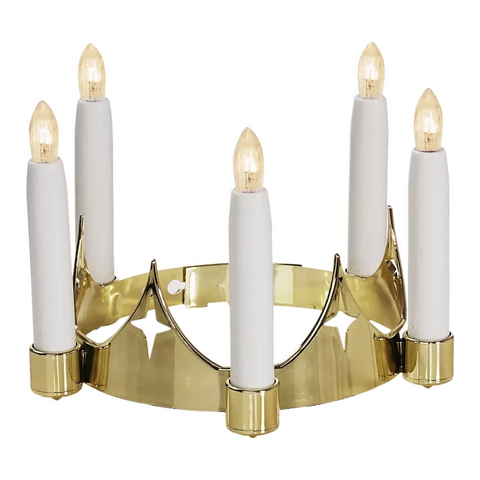
Lucia (from the Latin word lux, meaning “light”) was a young Christian martyr from Syracuse, Sicily. She lived around the year 300 AD and was killed during the persecution of Christians for refusing to renounce her faith. According to legend, Lucia secretly brought food and aid to persecuted Christians hiding in the catacombs beneath the city, lighting her way with a wreath of candles on her head. Her bravery and piety made her venerated as a saint, and many miraculous stories grew around her. In one account, she even survived having her eyes gouged out only for God to restore her sight. As a martyr whose very name symbolizes light, Saint Lucia came to embody the idea of shining faith and goodness amid darkness.
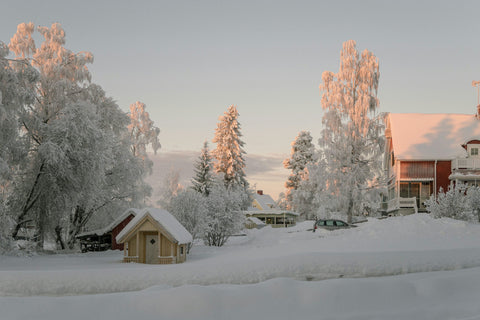
Long before Lucia processions, ancient Swedish folklore marked December 13th as a fearsome night. In the old calendar, this date fell on the winter solstice, the longest night of the year. People believed that on this Lussinatta, dark forces were at their peak and evil spirits roamed freely. A witch-like figure named Lussi was said to fly across the sky punishing households that hadn’t finished their pre-Christmas chores. To protect themselves, families would stay awake through the night, keeping lights burning and celebrating until dawn. In this way, long before it became Saint Lucia’s Day, December 13th was already a night of vigil against darkness in Sweden.

When Christianity spread to Sweden, the long night of December 13th took on new meaning. The Church chose Saint Lucia as the patron of the day, her symbolism of light fitting perfectly with a celebration aimed at driving away midwinter darkness. Still, old pagan habits lingered. For centuries, young people would go from house to house before dawn on Lucia Night, singing songs in exchange for food and drinks the old Lussi traditions living on inside a new Christian context.
Rather than eliminate these customs, the Church gradually shaped them. The focus shifted from disorderly revelry to a story of kindness, charity, and light. As time passed, Lucia became a beloved symbolic figure of hope. Some Swedish tales even claim she appeared on a ship during a famine, bringing food to starving villagers a miracle attributed to Saint Lucia herself. By the 1700s, the figure of Lucia had firmly settled into Swedish homes. Records describe young women in white bringing coffee and saffron buns before dawn, much like the Lucia we know today.
Lucia celebrations as we know them today grew through the 1800s and early 1900s. Schools, cities, and cultural groups began organizing Lucia processions. In 1927, a newspaper organized Stockholm’s first large public Lucia parade, and soon the tradition spread everywhere. Today, nearly every town, school, and workplace hosts its own Lucia procession.
With time, the Lucia figure gained a full entourage. Young women dressed in white follow her as handmaidens holding candles. Star boys wear white robes and pointed hats, carrying star wands. Little children join as gingerbread men and Santa elves. The result is a beautiful parade of white, gold, and candlelight – a moment of harmony during the dark winter months.
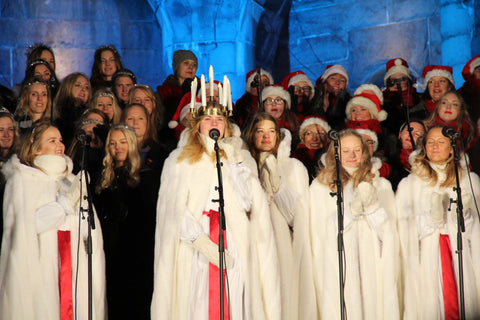
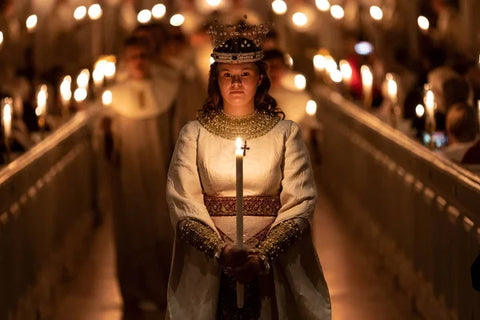
Modern celebrations remain faithful to tradition. Lucia leads her procession, crowned with candles and dressed in white with a red ribbon around her waist white for purity, red for martyrdom. She brings light and song into the winter darkness as the choir sings the iconic “Sankta Lucia” melody.
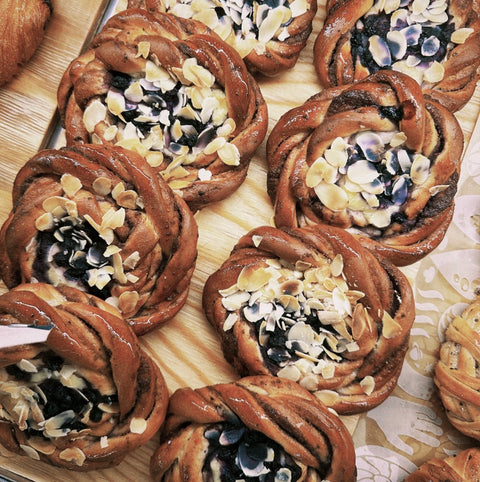
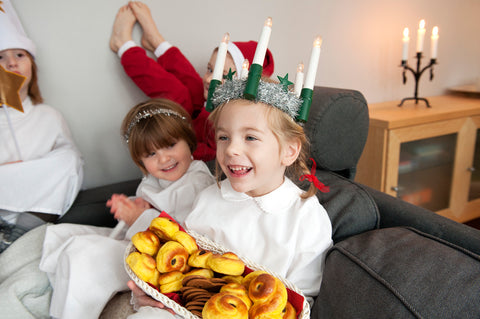
When the music fades, the celebration continues with traditional treats: saffron buns called lussekatter, crisp gingerbread cookies, and warm drinks like glögg or coffee. These foods, together with the candlelit atmosphere, create the comforting warmth Lucia is known for.
Lucia Day has become one of Sweden’s most cherished traditions, spreading far beyond its borders. Swedish communities around the world hold Lucia concerts and processions, sharing this magical celebration of light with others. The story of Lucia part saint, part folklore, part Nordic winter magic reminds us each December that even in the darkest times, a little light can shine brightly.
Whether you join a Lucia procession, bake saffron buns at home, or simply light a candle to honor the day, Lucia invites us to bring kindness and warmth into winter. At Swedishness, we cherish this tradition and love helping others keep it alive from Lucia crowns to saffron for baking.
Glad Lucia!
We are rated Excellent, read what our customers are saying