

Regular price




How Korv Became a Swedish Food Staple🌭
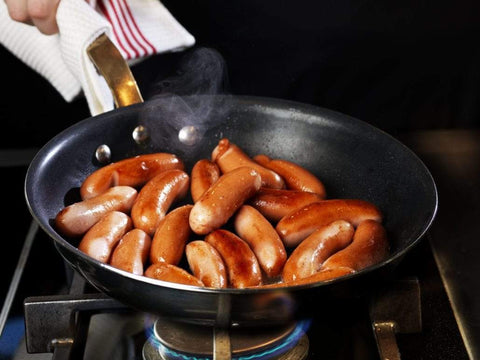
In Sweden, sausage, or korv is not simply a fast food option or an occasional comfort dish; it is part of the country’s everyday food infrastructure. Unlike celebratory dishes such as meatballs or holiday herring, korv appears in daily life across social classes and generations. It is affordable, widely available, and adaptable to both home cooking and street food culture. In a country shaped by long winters, modest agricultural seasons, and a historical emphasis on practicality, sausage became a reliable protein source that could be preserved, transported, and prepared quickly. Even today, it reflects that same pragmatic mindset: efficient, satisfying, and uncomplicated. Korv is not glamorous and that is precisely why it is so culturally significant.
The importance of sausages in Sweden is deeply tied to history and climate. Before refrigeration, preserving meat was essential for survival during harsh winters. Smoking, curing, and salting were common techniques across Scandinavia, and sausages became an ideal format for using all parts of the animal efficiently. Nothing was wasted. This resource-conscious approach shaped Swedish food culture for centuries and continues to influence it today. The legacy of preservation explains why sausages are still widely consumed: they represent continuity, sustainability, and a deep-rooted respect for practicality. Even modern supermarket varieties carry echoes of this survival-driven food tradition.
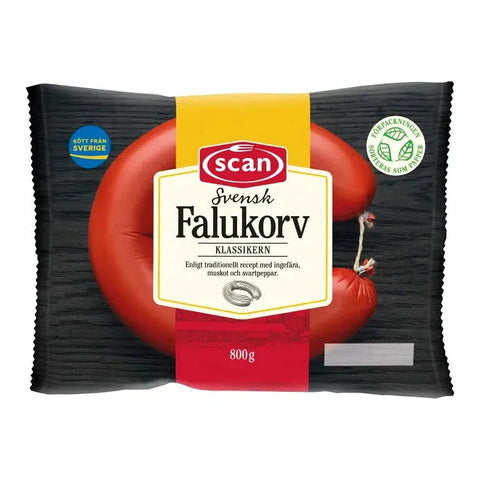
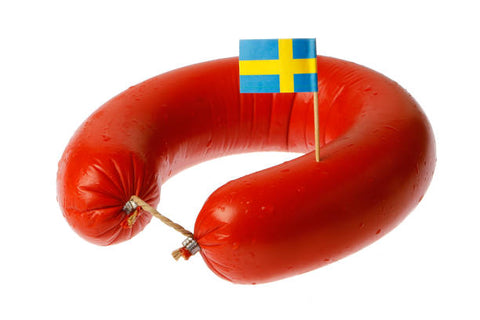
Among all Swedish sausages, Falukorv holds a special place. Originating from the mining town of Falun in the 16th century, Falukorv was historically made using oxen that worked in the copper mines. The sausage evolved into a thick, mildly smoked product with a smooth texture and subtle seasoning. Its flavor is not overpowering; instead, it is balanced and accessible, making it suitable for children and adults alike. Today, Falukorv is commonly baked in the oven with mustard, ketchup, cheese, and sometimes apples a dish that appears frequently in family dinners and school cafeterias. Its continued presence in everyday meals reinforces its symbolic status as a truly Swedish staple.

Sweden’s outdoor culture further explains the enduring popularity of sausage. Whether during ski trips, ice-skating outings, football matches, or forest walks, grilled korv is a common sight. It requires minimal preparation, cooks quickly over an open flame, and can be eaten standing in the cold. In winter, when temperatures drop well below freezing, holding a warm sausage wrapped in paper becomes both nourishment and comfort. The simplicity of korv aligns with the Swedish appreciation for functional solutions food that fits the environment rather than fighting it. Sausage is warming, filling, and easy to share, making it ideal for communal outdoor experiences.
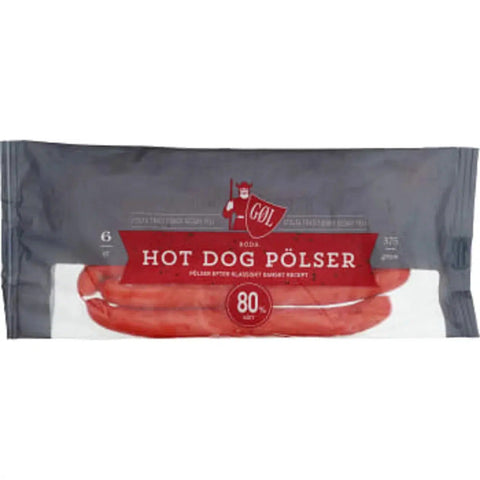
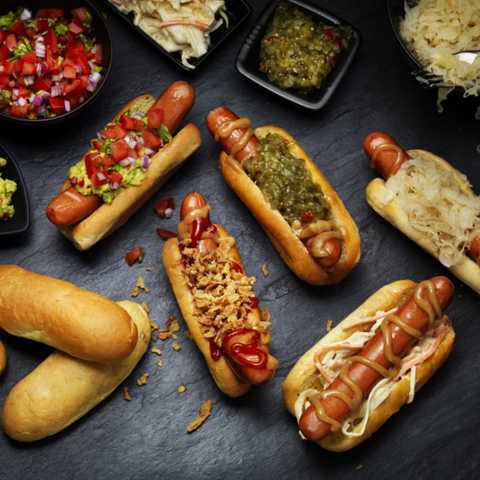
While the hot dog is often associated with American street food, Scandinavia has transformed it into something uniquely its own. In Sweden and Denmark especially, the hot dog has been adapted to local tastes and ingredients, resulting in a version that feels distinctly Nordic. Rather than relying solely on ketchup and mustard, Scandinavian hot dogs often include roasted onions, pickled cucumbers, remoulade, and even shrimp salad. These additions reflect regional flavor preferences: a balance between creaminess, acidity, and saltiness. The Scandinavian approach is not about excess, but about harmony in texture and taste.
One of the most surprising elements for many visitors is the use of shrimp salad as a topping. At first glance, seafood on a hot dog may seem unusual. However, the creamy shrimp mixture provides richness that complements the smokiness of the sausage, while the acidity of pickles cuts through the fat. This combination highlights an important characteristic of Scandinavian cuisine: layering flavors without overwhelming them. The result is a hot dog that feels indulgent yet balanced, simple yet thoughtfully constructed.
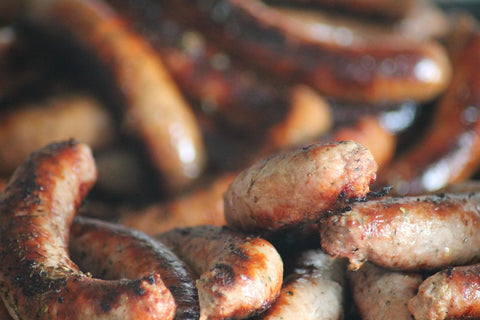
Across Swedish towns and cities, small hot dog stands known as korvkiosker play a subtle but important social role. These kiosks are often located near train stations, public squares, or sports arenas, serving as informal gathering points. People from different backgrounds stand side by side, eating quickly before catching a bus or warming up during winter evenings. There is something democratic about this space no reservations, no formality, just shared food in public. In this sense, the Scandinavian hot dog becomes more than street food; it becomes part of the rhythm of urban life.
Ultimately, the prominence of sausage in Sweden reflects deeper cultural values. Korv represents practicality over luxury, accessibility over exclusivity, and functionality over extravagance. It embodies the principle of lagom not too much, not too little offering exactly what is needed. Even the creativity seen in Scandinavian hot dogs does not aim for spectacle, but for balance. By examining something as ordinary as a sausage, one begins to understand how Sweden approaches food, climate, and community: with restraint, efficiency, and quiet cohesion.