
Regular price

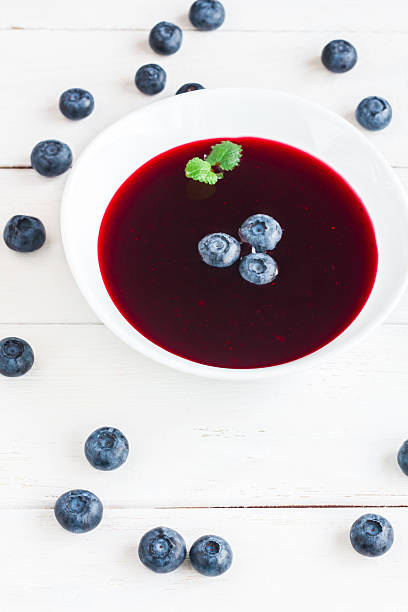
Blåbärssoppa: The Taste of Sweden, Wherever You Are 🫐
You don’t need anyone to explain what blåbärssoppa is.
You’ve had it after skiing.
When you were sick.
On school trips.
Maybe straight from a thermos on a freezing day.
But somehow, the moment you move abroad, that simple purple soup starts to mean something more.
Blåbärssoppa isn’t just food. It’s memory. It’s winter air. It’s Sweden.
Blåbärssoppa has its roots in rural Sweden in the 19th century, when preserving food for winter was essential. Wild bilberries smaller, darker, and more intensely flavored than cultivated blueberries grow abundantly across Swedish forests thanks to allemansrätten, the right of public access. Families would pick berries in late summer, dry them, or cook them into preserves to ensure a supply of vitamins during long, cold months. Turning bilberries into soup was practical: it required few ingredients, stretched the harvest, and created something easy to digest yet energy-rich. By 1848, commercial production had already begun, proving that what started as household survival food had become a valued part of Swedish food culture.
Blåbärssoppa’s most iconic association came in 1922 with the first Vasaloppet, the 90-kilometer cross-country ski race between Sälen and Mora. Since the beginning, the soup has been served at hydration stations because it provides quick carbohydrates, is gentle on the stomach, and can be served hot in freezing conditions. Today, tens of thousands of liters are consumed during the race each year, making it one of the most recognized symbols of Swedish endurance culture. Over time, it has become inseparable from the idea of resilience and winter sport so much so that first-time Vasaloppet participants are sometimes jokingly referred to as “blåbär.” What began as forest food became national fuel.
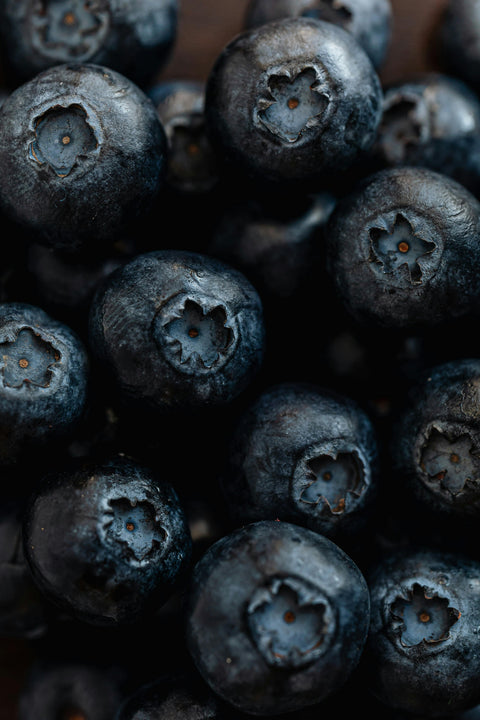
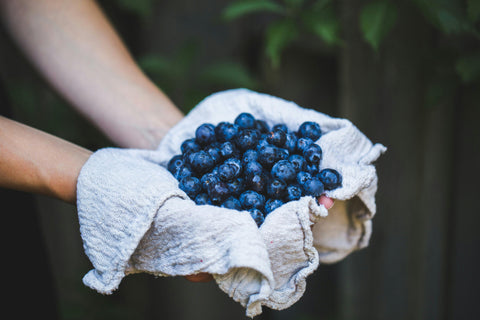
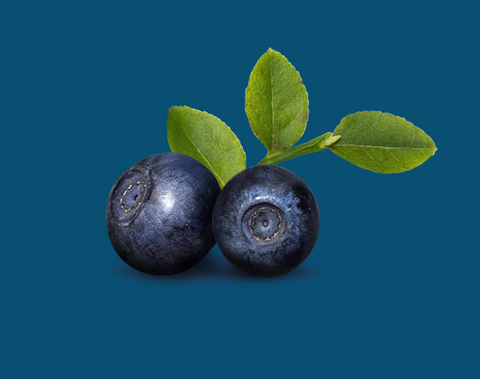
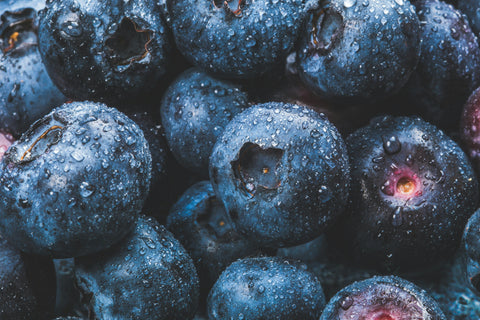
For those living abroad, one of the biggest surprises is realizing that blåbärssoppa is not made from the large blueberries commonly sold outside Scandinavia. Swedish blåbär are wild bilberries (Vaccinium myrtillus), which are purple inside rather than pale green and contain higher concentrations of anthocyanins the antioxidants responsible for their deep color. This gives the soup its intense hue and characteristic balance of sweetness and tartness. Traditionally, the recipe remains minimal: bilberries simmered with water, lightly sweetened, and thickened with potato starch or cornstarch. Some variations include cinnamon or cardamom, but the core remains unchanged simplicity and functionality over complexity.
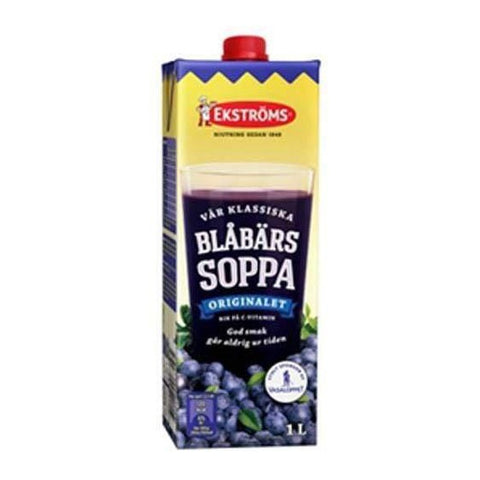
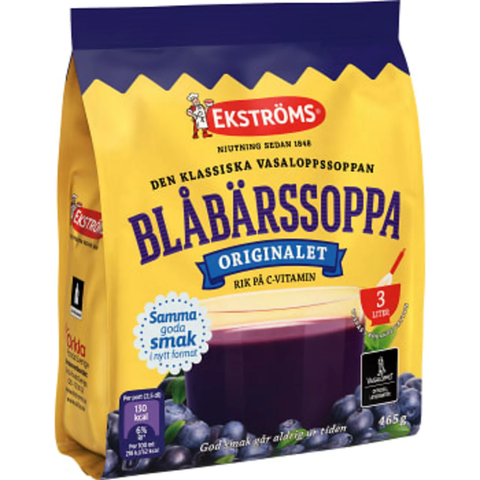
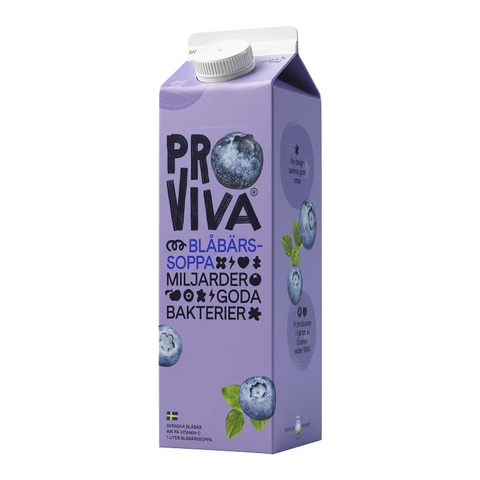
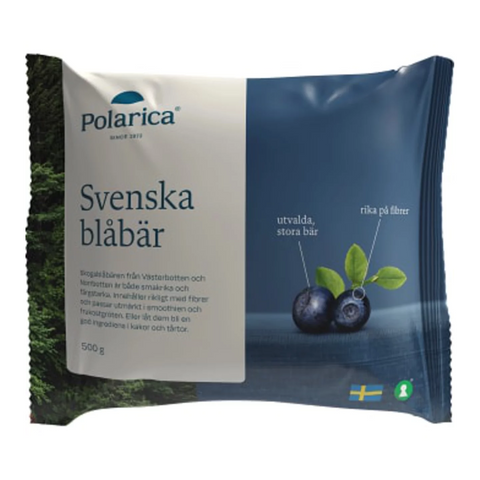
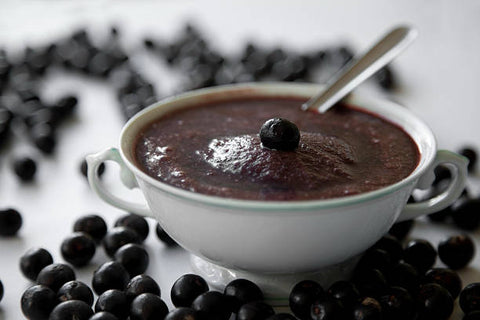
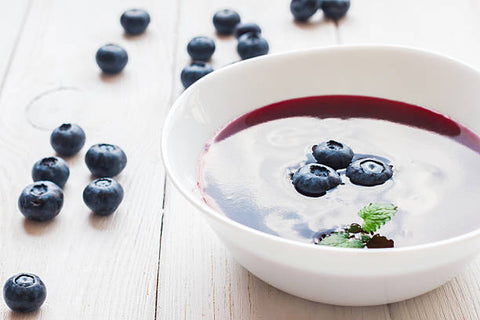
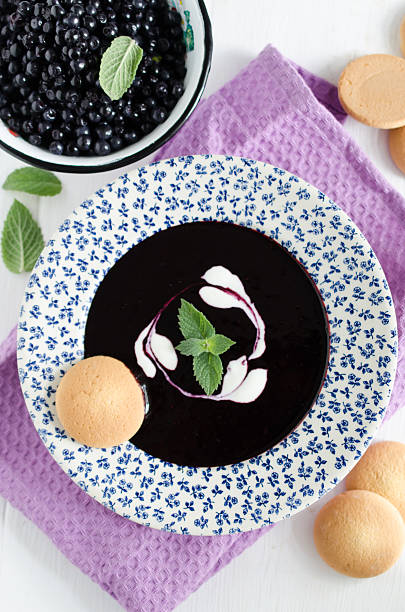
Preparing blåbärssoppa yourself abroad is straightforward if you can find wild bilberries or small, dark frozen blueberries. Simmer the berries with water for about ten minutes, sweeten to taste, and thicken gently with starch for the classic slightly velvety texture. It can be served warm in winter or chilled in summer, poured over porridge, paired with Swedish pancakes, or enjoyed straight from a mug. However, sometimes what you miss is not just the recipe, but the exact taste you grew up with. For that reason, ready-made versions like Ekströms Blåbärssoppa (both liquid and mix) and organic bilberry powder from Kung Markatta remain popular choices for Swedes abroad. They offer familiarity, consistency, and a direct connection to a flavor deeply embedded in Swedish everyday life.
Wherever in the world you are, a cup of blåbärssoppa carries more than flavor, it carries memory, landscape, and tradition. Sometimes, staying connected to home can be as simple as something warm and purple in your hands. 💙